


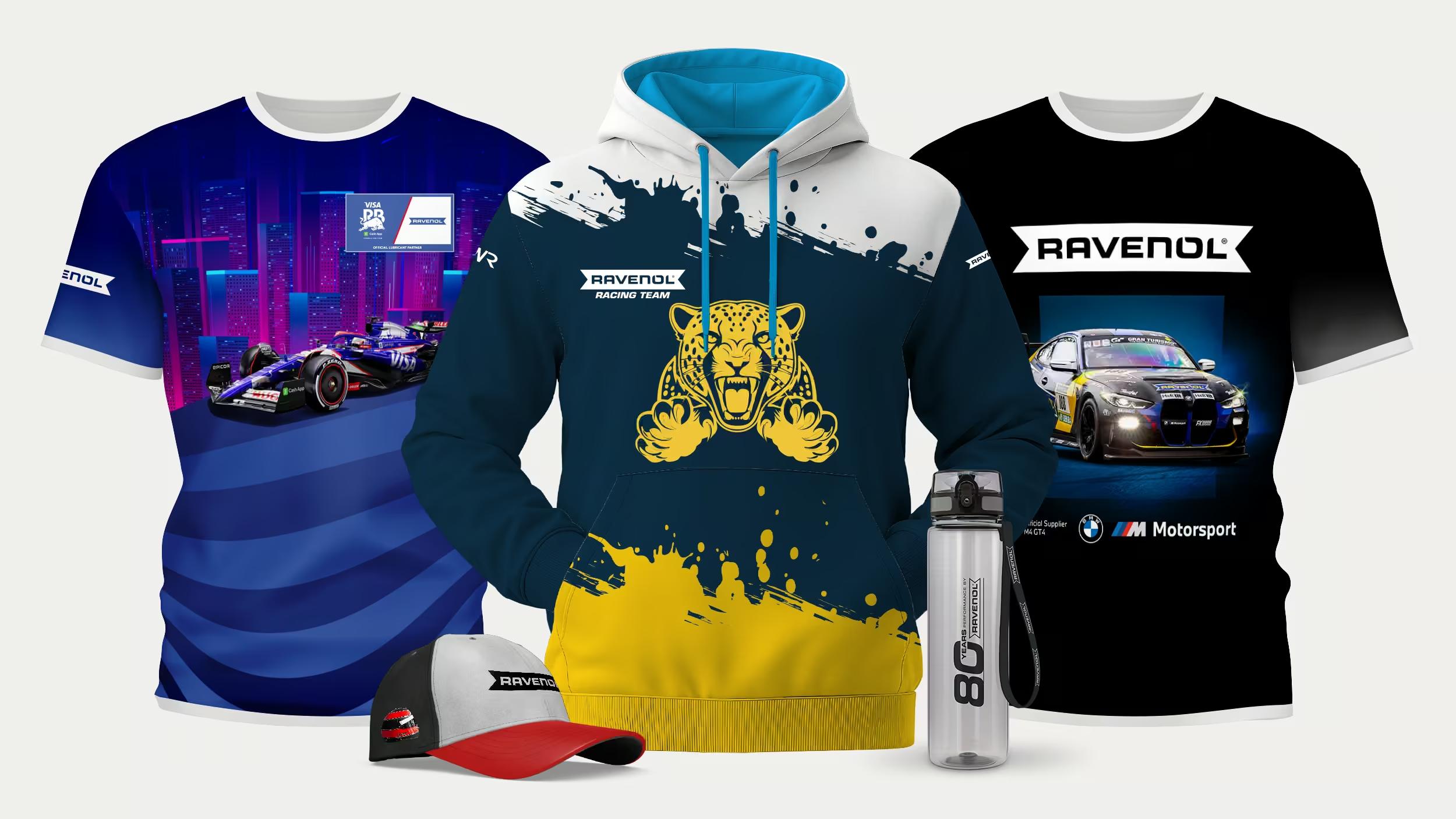
1. WHAT WE DO
Sports equipment is not just a shirt. It’s a memory of the moment when a person overcame themselves. When they finished a marathon. When they won a team game. When they completed a triathlon.
When a person looks at that equipment later – they remember the pain in their legs at kilometer 30. They remember not wanting to continue. They remember pushing through anyway. And they finished. And they smile.
Good sports equipment is not a marketing tool. It’s a time capsule. It’s an artifact of achievement.
Sports Equipment Design is our service for creating gear that captures and preserves the emotion of an event.
What this includes
Emotional design: Every design element works on the athlete’s feeling. Color is chosen not for visibility from far away, but because it evokes a sense of strength or movement or energy. The logo shape is not just a logo – it’s a symbol that means “I did this.”
Community identity: Equipment unites people. All participants in the same jersey – this is not just a crowd. It’s a tribe. It’s people who went through the same thing. It creates a sense of belonging.
Lasting quality: Athletes don’t throw this equipment in the trash. They wear it on training runs. They hang it on the wall. They show their kids. “Look, I ran a marathon in this.” Materials, seams, design – everything is chosen so the equipment lasts many years.
Wearable pride: Equipment should look good. Not fancy, but powerful. So athletes wear it with pride. Because in it, they feel like athletes. Not just people who exercise. But athletes.
Functional beauty: Design and function are one. Color is visible in any condition not because the brand needs advertising, but because the athlete needs to feel visible and noticed. Material breathes not because of marketing, but because the athlete is comfortable. Seams don’t chafe because it’s not safe – the person can get distracted from their achievement by discomfort.
Event storytelling: Design tells the story of the event. Maybe it’s the marathon number. Maybe it’s the route profile. Maybe it’s a symbol that means “triathlon.” When an athlete looks at these details – they remember.
2. WHAT PROBLEMS WE SOLVE
- Equipment looks like cheap merchandise, athletes are embarrassed by it, put it away immediately after the event.
- Event logo takes up so much space that the essence gets lost – the athlete and their achievement becomes just an advertisement.
- Equipment is uncomfortable, distracts from the moment – chafes, doesn’t fit right, wrong size.
- Design doesn’t reflect the significance of the event, if it’s a serious marathon but equipment looks like school PE class.
- Low quality materials, equipment falls apart after two washes, athletes can’t keep it as a memory.
- Equipment doesn’t create community feeling, each participant looks random, no unity, no “we”.
3. WHY ALMA
-
Design that evokes emotion, not sells product
We don’t design for marketing. We design for feeling. How does an athlete feel in this equipment? Powerful? Energized? Part of a community? Every color choice, every shape, every texture – is an investment in emotion. An athlete puts on this equipment and becomes better. Not just looks – becomes.
-
Equipment as memory, not advertising
The key in design is not the event logo (though it matters). The key is that an athlete, looking at this equipment a year later, remembers the pain, the exhaustion, the victory. Design creates triggers for memory. This is not a product. This is a time capsule.
-
Community through design
When people see each other in the same equipment – they recognize “theirs.” It’s not just a jersey with a logo. It’s a sign that you went through this. That you won. Design creates visible unity, and this amplifies the emotion of achievement.
-
Quality that preserves memory
Bad fabric falls apart. Bad seams rip. Bad design looks cheap. We work with the best manufacturers because this equipment will be worn for at least 5 years. An athlete should be able to show it to their kids. “I ran a marathon in this”.
-
Inclusive design – all sizes, all body types
Athletes are different. Tall, short, lean, powerful. Equipment should look good on everyone. Not to please marketing. But because every athlete deserves to feel good in their body. Design works for everyone.
4. OUR APPROACH
Phase 1: Event experience & participant research
First – deep understanding of the event and athletes. What kind of marathon? Who comes? Is it first-time for many? Elite athletes? What path do participants take? What emotions do they experience? Where’s the hardest part? Where’s the most beautiful moment? We interview past participants. We watch the finish line – how people feel when they finish. Based on this understanding – we determine what design will resonate.
Deliverables: Event Experience Analysis, Participant Research, Emotional Mapping, Design Direction.
Phase 2: Visual identity & emotional design
We design visual identity. This is not just pretty colors. These are colors that evoke the right emotions. Maybe energetic colors for a sprint. Maybe enduring colors for a marathon. We design the event logo so it doesn’t dominate, but reinforces. We add details that tell the story. Maybe the route symbol. Maybe the year number. Maybe a quote from an athlete. All of this – triggers for memory.
Deliverables: Visual Design Concepts, Emotional Color Strategy, Logo & Details, Design Iterations.
Phase 3: Fit & comfort specification
Equipment must fit perfectly. On different body types. We develop sizing that works for most people. We select fabrics that breathe, that are soft on skin, that support movement. We design seams so they don’t chafe. All of this – is not a bonus. It’s the foundation of good equipment.
Deliverables: Sizing Guide, Material Specifications, Comfort Testing, Technical Sheets.
Phase 4: Prototyping & athlete testing
We create samples on real athletes of different types. How does it look? How does it fit? Is it comfortable? How does an athlete feel in this equipment? We ask them to put it on and run 5 km. Then we ask – how did you feel? What do you remember? Based on this – we change things. Maybe the color looks good in photos but different on an athlete. Maybe the size doesn’t work. We iterate.
Deliverables: Prototypes, Athlete Testing Report, Feedback Integration, Final Design.
Phase 5: Production & quality control
We coordinate production with focus on quality. Not speed, not cheapness. Quality. Because this equipment will be worn for years. We check the first samples. We check the fabrics. We check the seams. We check the logo printing. Everything must be perfect.
Deliverables: Quality Control Reports, Production Timeline, Delivery Coordination.
Phase 6: Event distribution & experience
At the event, athletes receive equipment. We make sure everything is right. At the finish line – people in your gear. In that moment they feel like athletes. They remember this equipment. Then we follow up. Athletes post photos – not because it’s advertising, but because they’re proud. We collect their stories.
Deliverables: Event Logistics, Distribution Support, Participant Stories, Social Engagement.
CONCLUSION
Sports equipment is not a marketing tool. It’s an artifact of achievement. When a person runs a marathon – they go through pain, fear, exhaustion. And at the end – victory. The equipment they wore – is part of that story.
ALMA designed equipment for 15+ sports events. Marathons, triathlons, team games. And the result is always the same: people don’t throw this equipment away. They wear it. They show it off. They remember it.
If you organize a sports event – you create a memory. Equipment is part of that memory. Do it right.

why ALMA Agency

100%
Satisfaction
100% quality or you'll get 100% money back

Designing
for Tomorrow
You know your product, we follow latest trends in development and design to make it not just modern today, but tomorrow

Full-Circle Service
We are not doing everything, but we can make everything within our field of expertise. And make it top-to-bottom
 10 years
of experience
Our agency is a team of dedicated specialists with extensive industry experience
 You grow,
we grow
We always keep in mind your strategic goals when developing a product. Your success is our success
 Long-Term
Thinking
We are focused on a long-term relationship and respect your trust

 LinkedIn
 Instagram