


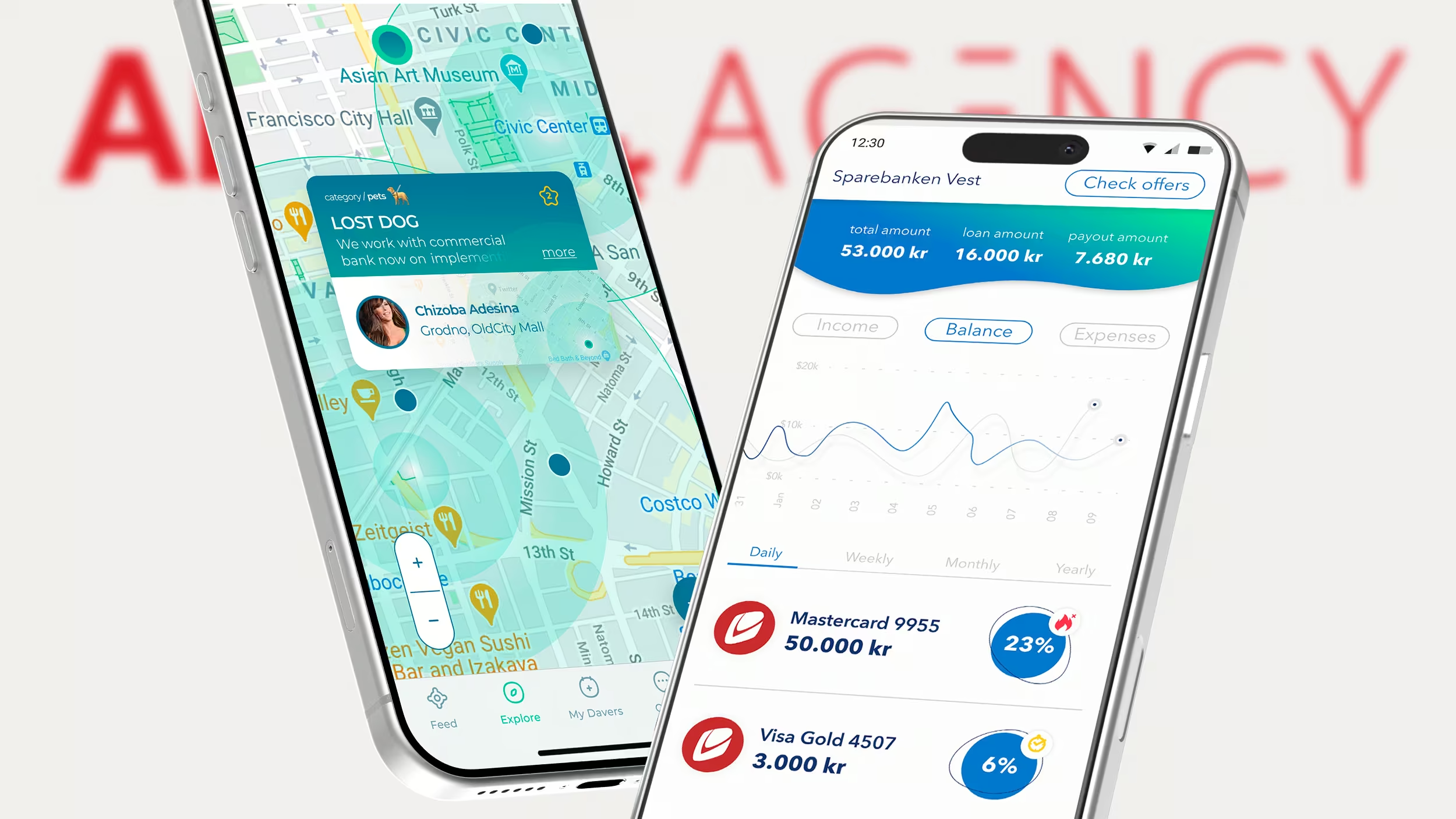
1. WHAT WE DO
Mobile app is not a website squeezed into a small screen. It’s a completely different creature. On mobile, the user holds it in one hand, gets distracted every 5 seconds, and decides – use this app or delete it. You have 3 seconds.
We create mobile apps that capture the user in those 3 seconds and don’t let go.
What this includes
Research-driven design: We don’t guess how a button should look or where navigation should be. We research – who is your user? What do they want? What problems do they solve with your app? Based on this, we create design.
Architecture & flows: We plan the user’s path from opening the app to the desired action (purchase, registration, payment, support). Where might they get stuck? Where might they get confused? Where might they give up and delete the app? We eliminate these points.
Conversion-optimized design: Every screen drives conversion. What button size maximizes clicks? What color reinforces action? Where’s the information that convinces? We design behavior, not beauty.
Multi-platform system: iOS and Android should look like one app, but work by their rules. Apple HIG, Google Material Design – we know both. And the app looks native on both platforms.
Scalable design system: The app grows. New screens, new features are added. Design shouldn’t fall apart. We create a component system that scales with the app.
2. WHAT PROBLEMS WE SOLVE
- Beautiful app, but users don’t understand it and delete it within a week because the UX is confusing.
- High churn on onboarding: 70% of users don’t complete registration because the process is too complex.
- Conversion on key actions (purchase, subscription, payment) is very low, even though everything seemed clear.
- Developers say “it’s impossible to do this,” designers say “we need to do this,” nobody listens to each other.
- App development takes 6+ months and costs 2x more because there’s no clear architecture.
- iOS version doesn’t match Android – the app looks like a ported product, not a native solution.
3. Why ALMA
-
User research that becomes design
We don’t believe our assumptions. We talk to real users (not 3-4 friends, but 15-20 target users). We find out their tasks, pain points, habits. Based on this, we create architecture that works not because it looks beautiful, but because it solves a real problem for a real person.
-
Conversion optimization on every screen
We don’t design an “app in general.” We design every moment of truth. Where might a user give up? Where do we need extra convincing? What visual hierarchy reinforces the desired action? Result: conversion on key steps (registration, first purchase, repeat purchase) increases 20-40%.
-
Native experience on both platforms
iOS and Android are different ecosystems. iOS users are used to one pattern, Android to another. We create an app that looks native on each platform but follows one logic. When a user switches from iPhone to Android, they see recognizable elements.
-
Speed + European quality = startup efficiency
We create an app not in 6 months, but in 3-4 (*Detailing can increase project timelines). Not because we rush. Because we have a process that works. And because our client shared our vision on work processes! Research → Architecture → Design → Handoff – every stage is optimized. European quality, startup speed.
-
Design system that grows with the app
On day one the app has 5 screens. In a year – 50 screens. If design isn’t systematic – every new screen looks like a patch. We create a system that lets developers and designers create new screens without destroying existing experience.
4. OUR APPROACH
Phase 1: Discovery & Research
We don’t open Figma first. We open our ears. We interview target users. What tasks do they want to solve with your app? What apps are they already using? Why do they use them? Why do they delete apps? We analyze competitors – not to copy them, but to understand what works and what doesn’t. We define success metrics: what does “successful app” mean? Low churn? High purchase conversion? Frequent use? Based on this, we create a design strategy.
Deliverables: User Research Report, Competitive Analysis, User Personas, Success Metrics, Design Strategy.
Phase 2: Information Architecture & User Flows
We plan the app structure. What screens are needed? In what order does the user see them? How do they connect? We create flows for key moments: how does a user register? Make their first purchase? Get support? For each flow, we identify friction points – where a user might get confused or give up. And we eliminate them at this stage, before we start drawing pretty screens.
Deliverables: Site Map, User Flow Diagrams, User Journey Maps, Friction Analysis, Wireframes.
Phase 3: Visual Design & High-Fidelity
Now we create visual design. Colors, typography, iconography, photography style – everything drives conversion and app logic. We create high-fidelity mockups for all key screens. Design in Figma, organized so developers can easily extract sizes, colors, spacing. We create Design System of components: buttons, cards, inputs, modals. We document it all so developers understand how to use it.
Deliverables: High-Fidelity Mockups, Component Library, Design System, Design Specifications, Figma Handoff.
Phase 4: Prototyping & Usability Testing
We create interactive prototypes on key flows (registration, first purchase, main action). We test with real users. Do they understand what to do? Where do they get confused? What annoys them? Based on results, we change the design. This might be small changes (button size, text position) or big ones (flow redesign). Testing results help us convince the client that design works.
Deliverables: Interactive Prototypes, Usability Testing Report, Recommendations, Final Design Iterations.
Phase 5: Design Handoff & Development Support
We hand off design to developers. But not just a Figma file. We create documentation explaining every decision. Why is the button exactly this size? Because users often miss smaller buttons. Why is the text blue? Because in testing, users clicked blue text more often than black. Developers understand not just “how,” but “why.” And when questions appear (they will) – they can make decisions that align with design logic, not just do something that “looks close.”
Deliverables: Design Documentation, Development Guidelines, Specification, Q&A Support, Design Review. *Detailing can increase project timelines
Phase 6: Post-Launch Optimization
App is live. We track metrics. Where do users get stuck? On which screen do they exit most often? Which screens do they visit most? Based on this, we make improvement recommendations. Maybe we need to redesign onboarding? Make the “buy” button more visible? Is navigation confusing? We work with real data, not assumptions.
Deliverables: Post-Launch Analytics, Optimization Recommendations, A/B Testing Setup, Continuous Improvement Plan.
5. For Example
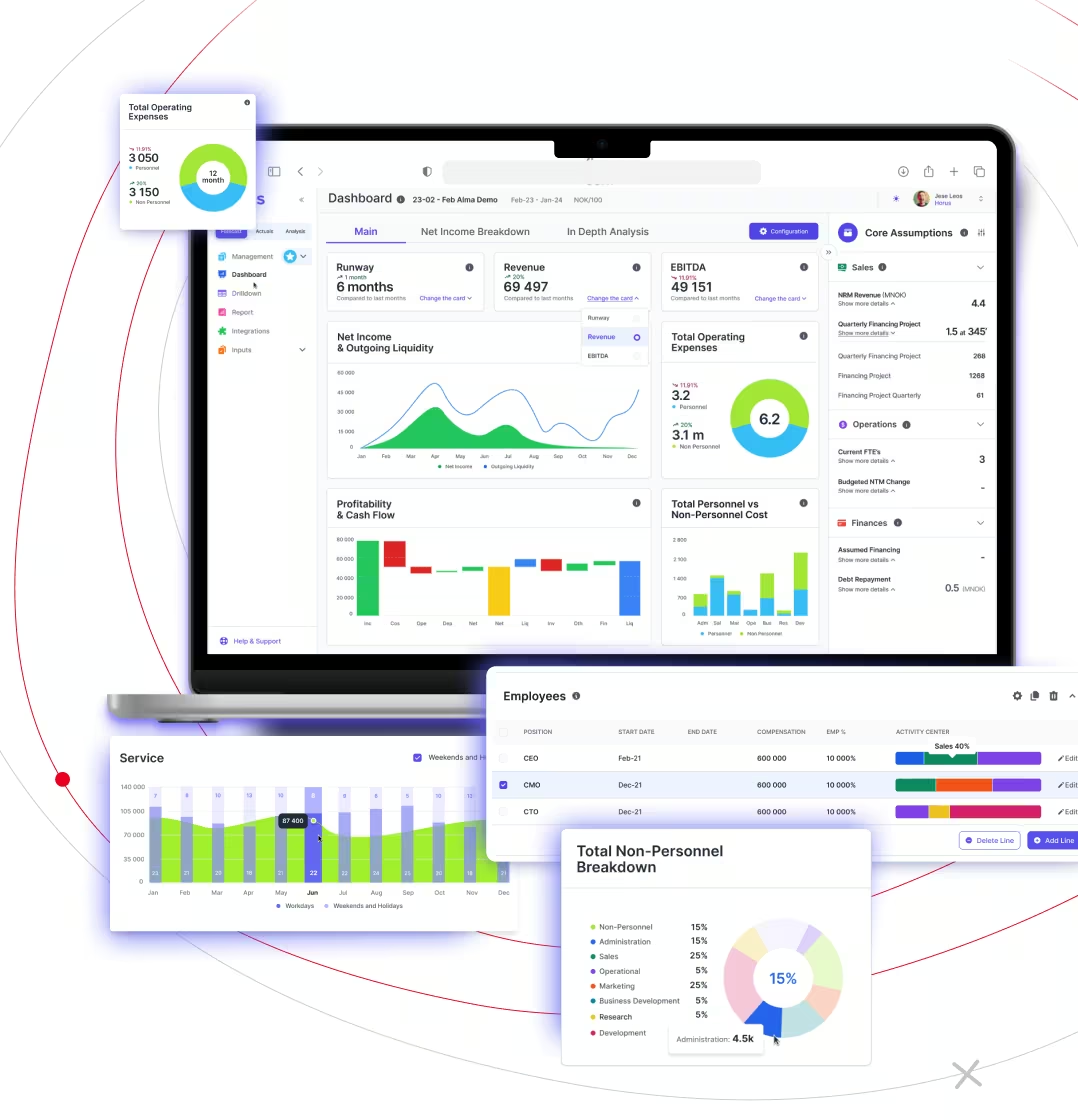
Case 1: Horus (Norway)
Norwegian fintech needed to redesign their app interface. The old one was technically correct but confusing. Users didn’t understand how to make a payment. Churn was 40% in the first week. We researched with 20 users, found the main problem – navigation. We redesigned information architecture, created new onboarding.
Result: Churn dropped to 12%, payment conversion grew 35%.
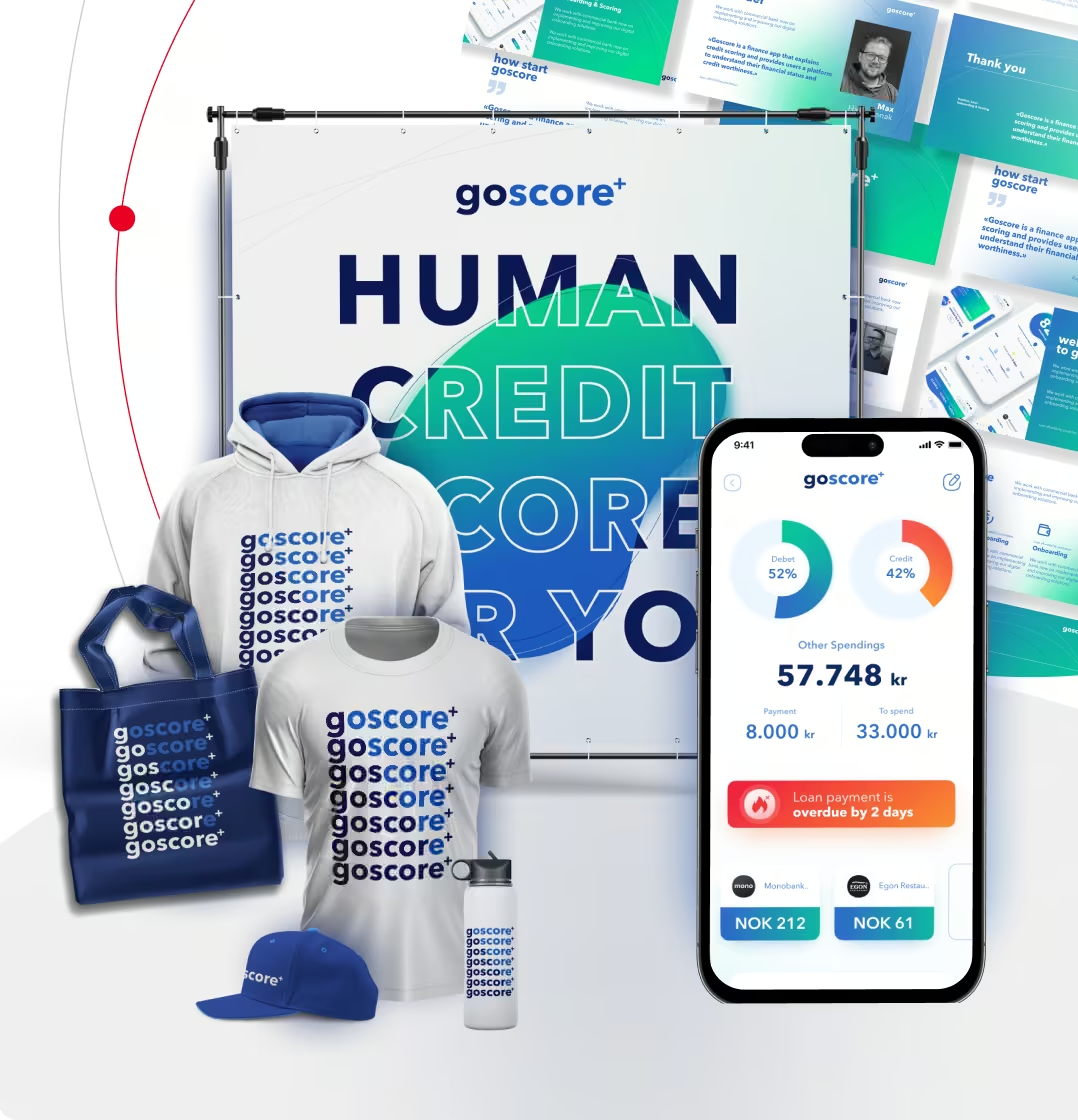
Case 2: GoScore (Fintech)
Startup with a personal financial scoring idea needed an app from scratch. Main task – make a complex financial process simple for regular users. We researched, created architecture that breaks complex process into simple steps. Design focused on trust (everything transparent, everything clear).
Result: Delivered a fully-tested mobile application used as a key argument in investor communications.
Case 3: Retail Marketplace (Europe)
European marketplace app on Android was successful, but iOS version looked like a port. iPhone users complained about inconvenience. We redesigned iOS version following Apple HIG, but kept unified logic with Android. App looks native on both platforms, but user gets same experience.
Result: iOS downloads grew 150%, retention improved, App Store rating grew from 3.8 to 4.6.
CONCLUSION
Mobile app is not a field for experiments. It’s a precise instrument that must work. Every pixel must have a reason. Every screen must solve a user’s task. Every action must move the user closer to their goal.
ALMA created 20+ apps for European startups, fintechs, and marketplaces. And they all share one thing: low churn, high conversion, users recommend to friends.

why ALMA Agency

100%
Satisfaction
100% quality or you'll get 100% money back

Designing
for Tomorrow
You know your product, we follow latest trends in development and design to make it not just modern today, but tomorrow

Full-Circle Service
We are not doing everything, but we can make everything within our field of expertise. And make it top-to-bottom
 10 years
of experience
Our agency is a team of dedicated specialists with extensive industry experience
 You grow,
we grow
We always keep in mind your strategic goals when developing a product. Your success is our success
 Long-Term
Thinking
We are focused on a long-term relationship and respect your trust

 LinkedIn
 Instagram