



1. WHAT WE DO
Brand doesn’t exist in a logo. Brand exists in experience.
When a customer sees your Instagram ad for the first time, they form an initial impression based on color, typography, imagery, and tone of voice. Then they visit your website. This should be the same impression, but adapted to a different context. Then they visit your store. Again the same – but physical. Then they receive an email. Packaging. SMS. Every interaction is a brick in a single structure.
The problem is that most companies don’t have a single structure. They have different structures that happen to share the same name.
Omnichannel brand consistency is our flagship service. We create one unified visual and communication space across all customer touchpoints.
What this includes
Visual system: one color palette that works everywhere. One typography. One photography style. One icon language. One spatial system (how elements are positioned, distances between them). All of this is not just beautiful – it’s designed to work on different screens, in different contexts, for different types of customers.
Communication system: one voice that sounds the same across all channels. One logic for building messages. One set of values that runs through all communications.
Experience design: one customer journey, regardless of where they start. From ad → website → app → store → email – everywhere the sequence is logical. Everywhere the next steps are clear. Everywhere the customer feels expected.
This is not just coordination. This is experience architecture.
2. WHAT PROBLEMS WE SOLVE
- Customers don’t recognize you when switching between channels, losing momentum and adding friction to purchase decisions.
- Different departments interpret the brand differently, complicating work processes and slowing execution.
- Psychologically, consistency = reliability, while experience gaps reduce conversion at every touchpoint.
- Marketing campaigns lose effectiveness because they’re not reinforced by corresponding channels.
- Scaling (new markets, channels) creates chaos when each local market creates “its own version” of the brand.
- Customers don’t remember you as a whole because they only see disconnected fragments.
3. WHY ALMA
-
Integrated approach: design + marketing + psychology
We don’t just create beautiful design. We analyze how every touchpoint drives customer behavior. Which color increases conversion? Which tone reduces doubt? Where are critical gaps? We unite aesthetics, psychology, and marketing logic into strategic framework.
-
Omnichannel strategy, not just design coordination
Most companies have separate strategies for web, social media, retail. We create one strategy that runs through all channels and drives one result. Marketers, designers, and retail teams speak the same language.
-
Scalable system for growth
When you add a new channel, market, or product line – the system adapts, it doesn’t break. New market? New platform? You follow the architecture, you don’t redesign everything from scratch.
-
Change management built into the process
We don’t just hand you the design and leave. We train your team, create governance, ensure the system lives and evolves with your business.
-
Results visible in customer behavior, not just aesthetics
Improvements in recognition, conversion, retention appear quickly. Not because we’re magicians. Because experience gaps are a huge drag on performance. Simply restoring consistency delivers measurable results.
4. OUR APPROACH
Phase 1: Comprehensive consistency audit
We analyze all touchpoints: website, app, store, social media, email, print, packaging. But not just “is the logo the same?” We analyze how each point works. What does the customer see? What do they feel? How does it influence their decision? We interview stakeholders (marketing, web, retail, product, sales). Result: not just “this doesn’t match,” but analysis of where consistency is most critical for conversion.
Deliverables: Audit report, consistency map, prioritized problem list, strategic recommendations.
Phase 2: Strategic brand architecture
We define your brand’s architecture. We start with brand essence – what are you first and foremost to the customer? Then personality – how do you behave? (energetic/calm, authoritative/friendly, premium/democratic). We create a messaging framework – how do you speak? We define each channel’s role: web=persuasion, app=convenience, social=conversation, email=trust, store=theater, packaging=first impression. Every channel aligns with the system but functions specifically.
Deliverables: Brand Architecture Document, Brand Essence, Personality Definition, Messaging Framework, Channel Role Matrix.
Phase 3: Design System creation
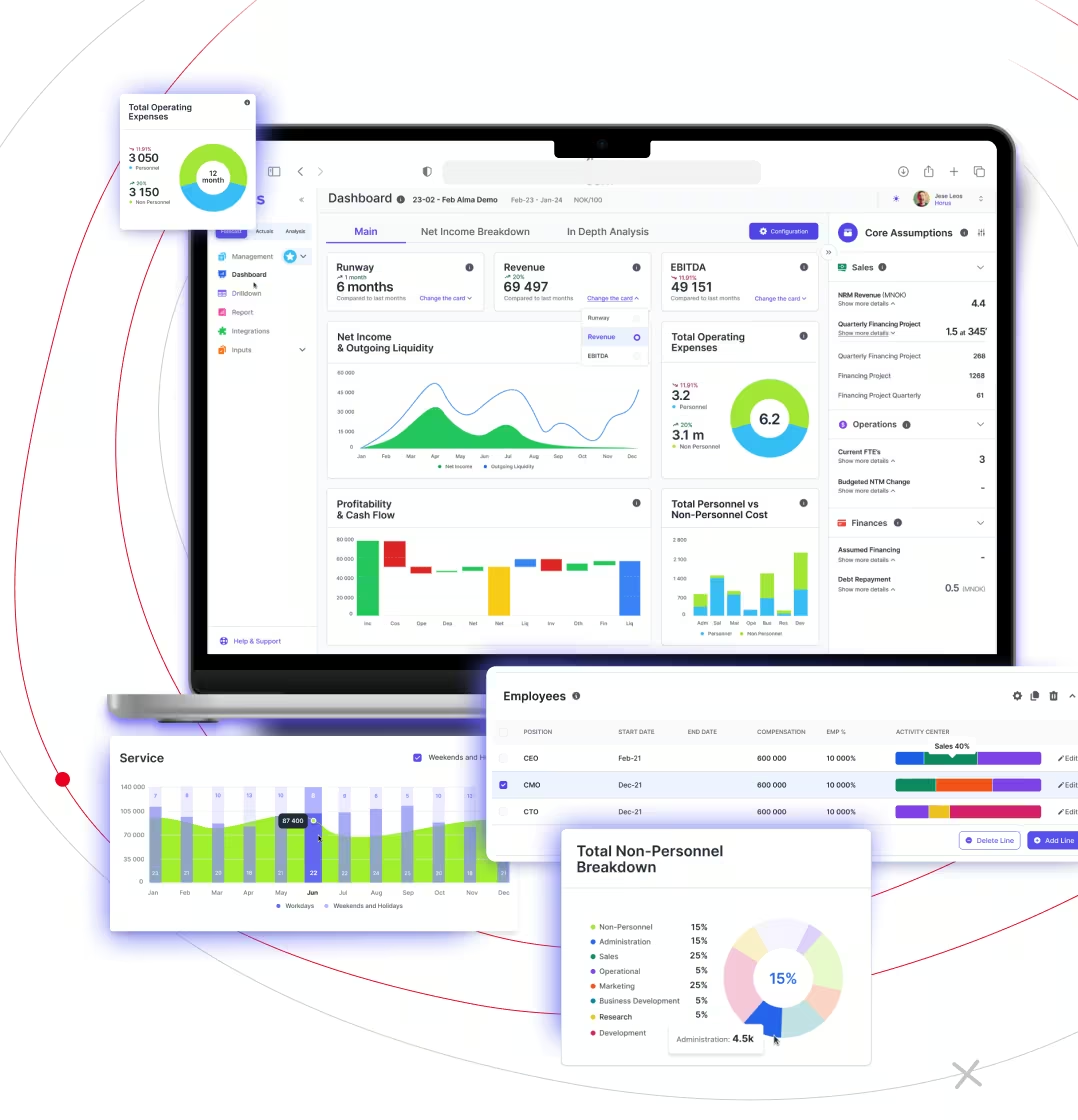
We create a living system that scales. Includes: color palette (with application for each channel), typography (headlines, body text, UI), iconography (unified system for all channels), photography style (lighting, color grading, people, context), UI components (buttons, cards, forms), motion language (pace, animations), spatial system (distances, responsive adaptation). We document in Figma, create Storybook for developers, export design tokens for automation.
Deliverables: Complete Design System, Component Library, Storybook, Design Tokens, Usage Guidelines, Implementation Files.
Phase 4: Customer experience mapping
We map the customer journey to the system architecture. Awareness (how do they discover you?), Consideration (how do they evaluate you?), Decision (what convinces them to buy?), Retention (how do they stay loyal?). At each stage, we identify critical moments – the moments that most influence decisions. For each critical moment, we define how the system works to increase the probability of desired behavior.
Deliverables: Customer Journey Map, Experience Standards, Conversion Optimization Guide, Channel Interaction Matrix.
Phase 5: Implementation strategy
We define priorities (what comes first?). We define resources (who does what?). We create a realistic timeline (not everything in a month, but in phases). We define success metrics (how do we measure results?). We plan change management (how do we convince the team the new system is better?).
Deliverables: Implementation Roadmap, Resource Plan, Timeline, Success Metrics Framework, Change Management Plan.
Phase 6: Rollout and training
We implement the system step by step. First, we train designers (how to use the system?). Then marketing (how to create campaigns within the system?). Then retail (which colors, how to position the logo?). Then partners. Everyone must understand why, not just what. We do QA at every stage. All elements are checked before launch.
Deliverables: Trained Teams, QA Reports, Governance Framework, Documentation, Training Materials.
Phase 7-8: Monitoring and optimization
The system doesn’t degrade. We monitor if anyone deviates from the architecture. Monthly reports with recommendations. Quarterly optimization sessions (new channel? new market? how to adapt?). We adapt the system to market changes and shifting consumer preferences.
Deliverables: Monthly Reports, Consistency Dashboard, Quarterly Optimization Roadmap, Evolution Strategy.
5. For Example
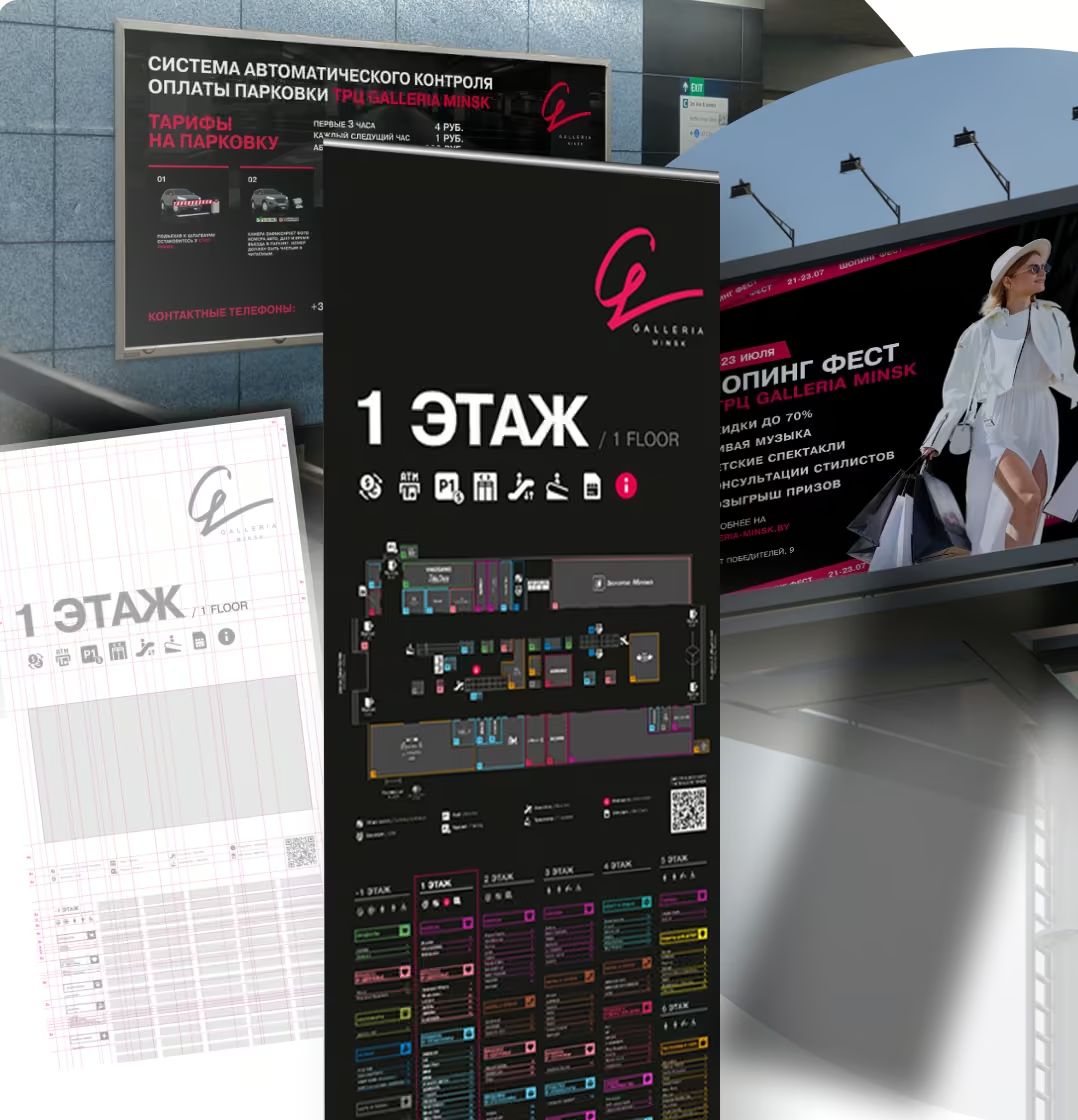
Case 1: Galleria Minsk
Shopping center with gaps between online and offline. Each department used its own identity version. We created a unified architecture: navigation system, color palette, marketing materials, website, social media. Every touchpoint spoke the same language. Result: 28% increase in foot traffic per year, 8 integrated campaigns, customers recognized the space throughout.
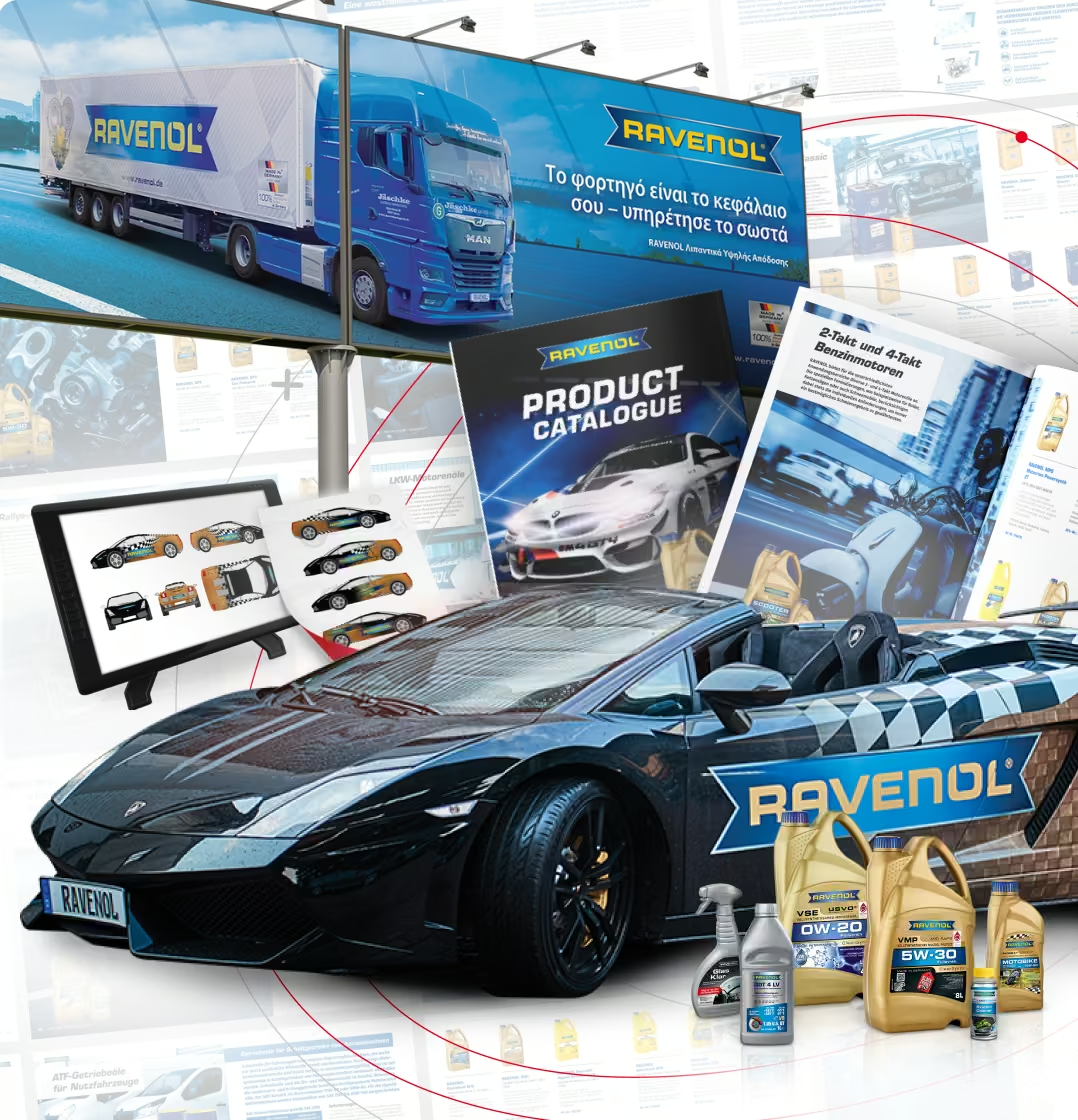
Case 2: Ravenol
Global lubricant manufacturer expanding across Europe, but each market interpreted the brand differently. Packaging, website, dealer materials didn’t align. We created a system with flexibility for local adaptation (language, norms) but unified architecture. Dealers knew how to present correctly. Result: modern visual system everywhere, strengthened premium positioning, better dealer relationships.
Case 3: goScore
Fintech startup with a logo but no system. Looked like a garage project, not a company you’d trust with money. We created complete architecture: identity, photography style, app UI system. Presented at 100+ events per year – consistent everywhere. Result: professional positioning, Design Excellence Award from TechStars, significant acceleration in funding and growth.
CONCLUSION
Brand consistency is not about making everything look pretty. It’s about making every touchpoint drive conversion. It’s about psychology-making the customer feel you’re in control. About making their journey clear. About every interaction reinforcing the impression.
ALMA has helped 50+ companies create this unified space. From local brands to global giants. And the results are always the same: more confident customers, higher conversions, stronger brand.

why ALMA Agency

100%
Satisfaction
100% quality or you'll get 100% money back

Designing
for Tomorrow
You know your product, we follow latest trends in development and design to make it not just modern today, but tomorrow

Full-Circle Service
We are not doing everything, but we can make everything within our field of expertise. And make it top-to-bottom
 10 years
of experience
Our agency is a team of dedicated specialists with extensive industry experience
 You grow,
we grow
We always keep in mind your strategic goals when developing a product. Your success is our success
 Long-Term
Thinking
We are focused on a long-term relationship and respect your trust


 LinkedIn
 Instagram